

If a hurricane, flood, tornado, freeze, wildfire, or other disaster physically damages qualifying property in an area declared a disaster area by the Texas governor, Tax Code §11.35 may temporarily exempt part of the property's appraised value from taxation.
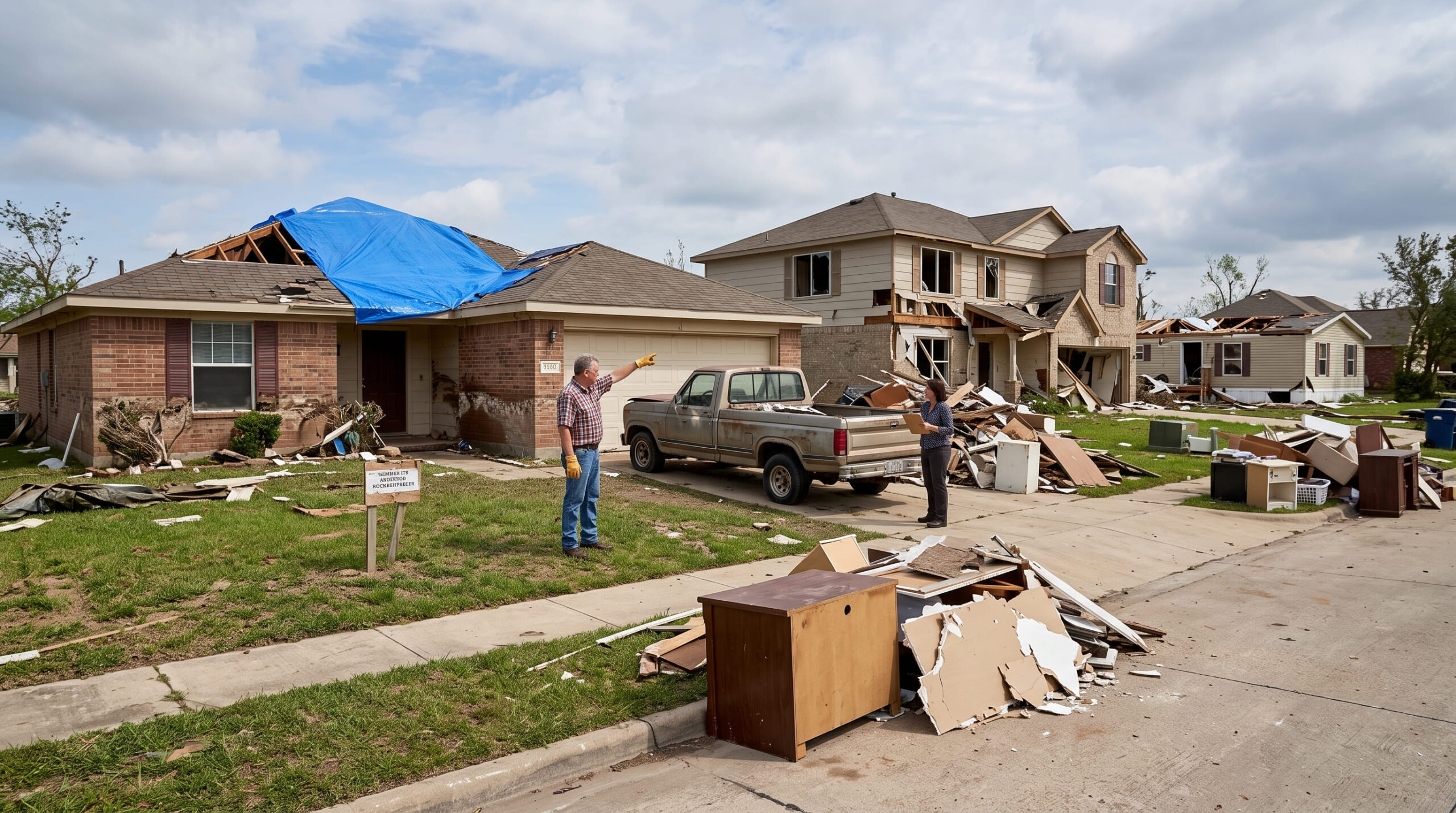
A property owner may qualify when the property is in a Texas governor-declared disaster area, the disaster causes physical damage of at least 15%, and the damaged property is a qualifying improvement to real property, income-producing tangible personal property, or certain manufactured housing. The owner generally must file Form 50-312 within 105 days after the governor declares the disaster area. The chief appraiser determines the damage level and exemption amount.
The temporary disaster exemption is narrower than general disaster relief. A severe weather event by itself is not enough. Tax Code §11.35 requires the property to meet several specific conditions.
The qualified property must be located in an area the Texas governor declared to be a disaster area following the disaster.
The statute defines damage as physical damage. Loss of income, reduced demand, or another purely economic impact does not by itself satisfy the physical-damage requirement.
The chief appraiser must determine that the qualified property was at least 15% damaged by the disaster.
The owner generally must apply no later than the 105th day after the governor declares the area a disaster area. A good-cause extension may be available from the chief appraiser.
Important: a disaster declaration does not automatically create the exemption for every property in the declared area. The individual property must satisfy the §11.35 requirements, and the owner must apply with the appraisal district.
The statute does not simply exempt every parcel of residential or commercial real estate. “Qualified property” is specifically defined.
| Property Type | Can It Qualify Under §11.35? | Important Requirement |
|---|---|---|
| Improvement to real property | Yes, if the statutory conditions are met. | The improvement must be physically damaged by the declared disaster by at least 15%. |
| Income-producing tangible personal property | Yes, if the statutory conditions are met. | The owner must also have filed the applicable rendition statement or property report showing taxable situs in the disaster area for that tax year. |
| Certain manufactured homes used as dwellings | Yes. | The manufactured home must satisfy the statutory definition and damage requirements. |
| Land by itself | Not listed as qualified property under §11.35. | The exemption applies to the qualified property categories defined in the statute. |
| Pure economic loss without physical damage | No. | The statute defines “damage” as physical damage. |
For businesses with machinery, equipment, inventory, or other income-producing personal property, review our Business Personal Property Tax guide as well.
The chief appraiser assigns a Level I, II, III, or IV damage assessment rating. The rating determines what percentage of the property's appraised value is used to calculate the temporary exemption.
| Level | Damage Assessment | General Description | Exemption Percentage |
|---|---|---|---|
| Level I | 15% to less than 30% | Minimal damage; property may continue to be used as intended. | 15% |
| Level II | 30% to less than 60% | Nonstructural damage; Comptroller guidance includes a waterline below 18 inches above the floor. | 30% |
| Level III | 60% to less than 100% | Significant structural damage; Comptroller guidance includes a waterline 18 inches or more above the floor. | 60% |
| Level IV | 100% | Total loss; repair is not feasible. | 100% |
Correction to the older article: “minor damage” does not automatically qualify. Level I begins only when the chief appraiser determines that the qualified property is at least 15% damaged.
The exemption percentage is not the same as a full-year percentage reduction in the tax bill. Texas first applies the applicable 15%, 30%, 60%, or 100% percentage to the property's appraised value for the disaster year. That amount is then prorated based on the number of days remaining in the tax year after the governor first declares the area a disaster area.
Step 1 — Full-year exemption basis:
Appraised Value × Damage-Level Percentage
Step 2 — Prorated exemption amount:
Full-Year Exemption Basis × (Days Remaining in Tax Year ÷ 365)
Estimated tax savings:
Prorated Exemption Amount × Applicable Tax Rate
Assume a qualifying improvement has a $1,000,000 appraised value, receives a Level I rating, and the governor's declaration leaves 306 days in the tax year. The Level I full-year exemption basis would be $150,000. Prorating that amount for 306/365 of the year produces an exemption of about $125,753. At an illustrative 2.5% combined tax rate, the tax effect would be about $3,144.
This example is for illustration only. The actual exemption depends on the property's appraised value, assigned damage level, declaration date, applicable taxing units, and tax rates.
The normal filing deadline is 105 days after the date the governor declares the area in which the qualified property is located to be a disaster area.
Tax Code §11.43 also states that the chief appraiser may extend the §11.35 application deadline for good cause shown. Property owners should not rely on obtaining an extension and should file Form 50-312 as early as possible.
Do not calculate the deadline from the date your property was damaged unless that is also the governor's declaration date. The statutory 105-day period is tied to the governor's disaster declaration for the area.
The Texas Comptroller identifies Form 50-312, Temporary Exemption Property Damaged by Disaster, as the application form for this exemption. File the application with the appraisal district in which the qualified property is located.
Verify that the property is located in an area included in the applicable Texas governor disaster declaration and record the declaration date for the 105-day deadline.
Photograph and video the damaged property before repairs when safely possible. Keep dated inspection reports, repair estimates, engineering reports, invoices, insurance records, and adjuster documentation.
Separate the damaged improvement, manufactured home, or income-producing tangible personal property from items that are not part of the §11.35 exemption claim.
Income-producing tangible personal property must also satisfy the statutory rendition/property-report requirement showing taxable situs in the disaster area for the year of the disaster.
Submit the application to the local appraisal district before the 105-day deadline and keep proof of filing.
The chief appraiser determines qualification and the damage rating and may rely on emergency-management, FEMA, or other appropriate information when evaluating the claim.
The Comptroller's current Property Tax Forms page lists Form 50-312.
The chief appraiser determines whether the property qualifies and assigns the damage assessment rating. The Comptroller states that the chief appraiser must send written notice of approval, modification, or denial no later than five days after making the determination.
If the exemption is approved after the tax amount has already been calculated, Texas law requires the applicable assessor to recalculate the tax. If the bill was mailed but remains unpaid, a corrected bill is issued. If the tax was already paid, the excess attributable to the exemption is refunded.
The §11.35 temporary disaster exemption expires on January 1 of the first tax year in which the property is reappraised under the applicable reappraisal statute.
The temporary disaster exemption is only one disaster-related property tax provision. Depending on the property and facts, other Texas rules may also matter.
A residence homestead rendered uninhabitable or unusable by casualty, wind, or water damage may continue receiving qualifying homestead treatment while a replacement structure is being built, subject to statutory conditions.
Certain homeowners, residential owners, and qualifying small businesses with disaster-damaged property may be eligible to pay property taxes in four installments under separate Texas rules.
Texas also has a separate temporary exemption for a qualifying residence-homestead improvement completely destroyed by fire, with its own eligibility rules and 180-day application deadline.
If physical damage existed as of the January 1 appraisal date or the appraisal district's value is otherwise unsupported, the ordinary appraisal-protest process may raise separate valuation issues.
For the broader disaster context, see How Natural Disasters Affect Texas Property Taxes and our Texas Property Tax Exemptions guide.
Tax Code §11.35 allows qualifying property that is at least 15% physically damaged by a disaster in a Texas governor-declared disaster area to receive a temporary exemption of part of its appraised value.
The chief appraiser must determine that the qualified property is at least 15% damaged. Level I covers 15% to less than 30% damage, Level II 30% to less than 60%, Level III 60% to less than 100%, and Level IV a total loss.
The normal deadline is the 105th day after the governor declares the area containing the qualified property to be a disaster area. The chief appraiser may extend the deadline for good cause shown.
No. The property must fit a qualified property category, suffer at least 15% physical damage from the disaster, and meet the other statutory requirements. The owner must also apply for the exemption.
Yes, qualifying improvements to commercial real property can qualify if the statutory requirements are met. Income-producing tangible personal property can also qualify when the additional rendition and taxable-situs requirements are satisfied.
Section 11.35 defines qualified property as income-producing tangible personal property, improvements to real property, and certain manufactured homes. Land by itself is not listed as a qualified property category.
No. The damage level determines the percentage of appraised value used for the exemption, and that amount is then prorated based on the days remaining in the tax year after the governor's disaster declaration. The tax effect depends on the resulting exempt value and applicable tax rates.
If approval reduces the tax due after payment was made, Texas law requires the applicable tax collector to refund the amount paid in excess of the corrected tax liability.
PropertyTaxes.Law can help evaluate whether the damaged property fits §11.35, review the 15% threshold and application deadline, organize supporting documentation, and identify related protest or exemption issues.
Review Your Disaster Exemption OptionsThis article provides general educational information and is not legal, tax, or appraisal advice. Disaster declarations, application deadlines, qualifying property, damage ratings, appraisal values, tax rates, and related relief depend on the facts and current law. Confirm the applicable declaration and deadline with the local appraisal district and official Texas sources, and consult qualified counsel for legal advice.
Brandon and his team have proven they can perform with any product type we give them,
from industrial and office property to single and multi-family residential.
At a critical time when a property was in lease-up, we were faced with an unreasonable and unjustified assessment.
Brandon’s tenacity and responsiveness resulted in a fair assessment and the largest value change I've seen in my career.
Outstanding!! These guys are pros - they are great at what they do and great to work with.