

Hurricanes, floods, tornadoes, wildfires, freezes, and other disasters can damage property and disrupt local communities. Texas law provides several forms of property-tax relief, but the rules depend on when the damage occurred, whether the governor declared the area a disaster area, and how severely the property was physically damaged.
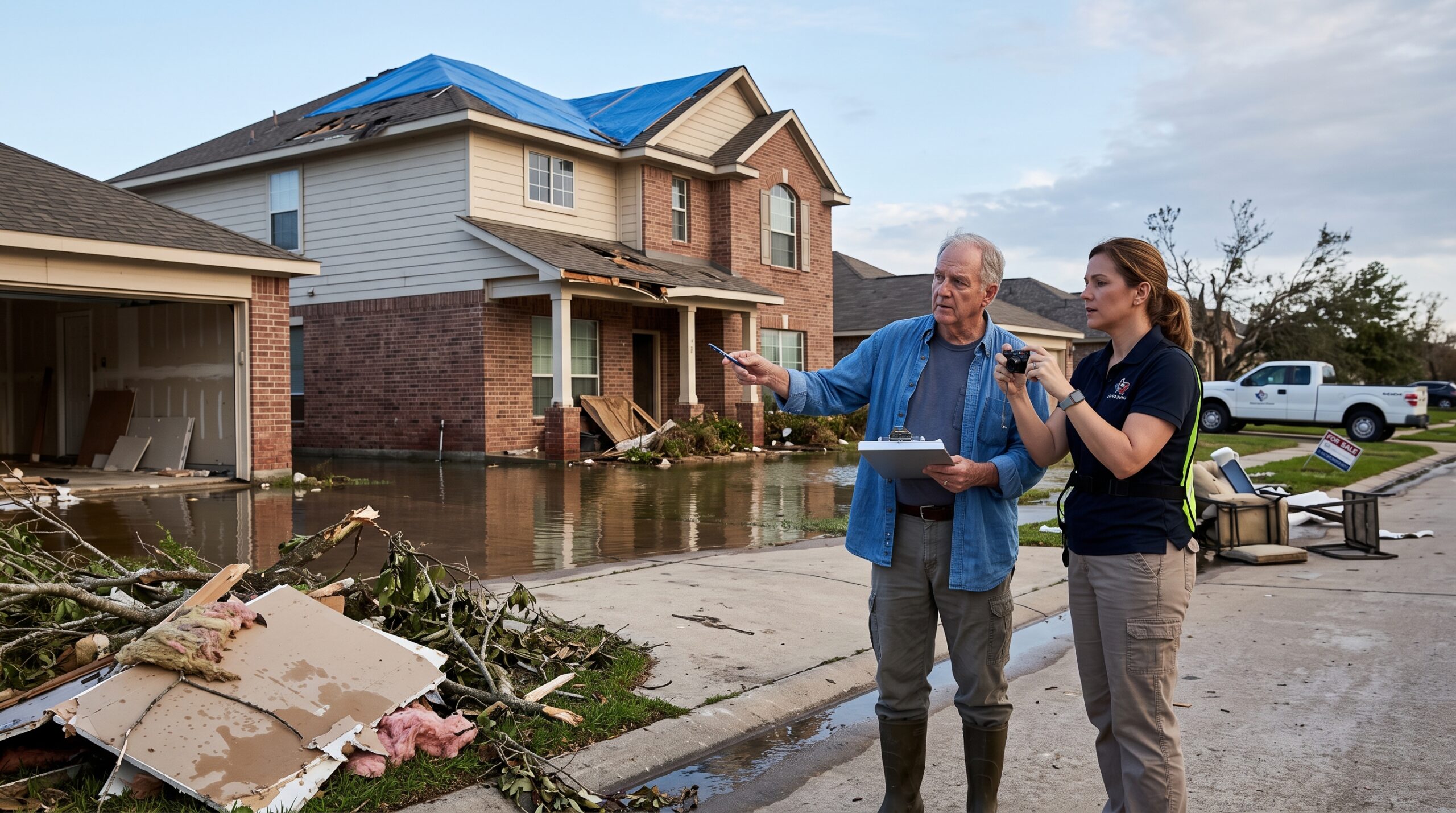
A disaster can affect Texas property taxes in several ways. Qualified property that is at least 15% physically damaged in a governor-declared disaster area may qualify for a temporary exemption under Tax Code §11.35. Certain damaged homeowners and qualifying small businesses may also have installment-payment options. Separately, local taxing units may use special disaster-related tax-rate rules. Appraisal districts value property; they do not set property tax rates.
Property owners should separate three issues: property value, exemptions or other relief, and tax rates. They are related, but different parts of the Texas property-tax system control them.
Physical damage can support disaster-specific relief and may affect market value depending on the applicable valuation date.
Tax Code §11.35 can exempt a portion of the appraised value of qualifying property damaged in a governor-declared disaster area.
Certain damaged residential properties and qualifying small businesses may be able to pay property taxes in four installments.
Local taxing units, not appraisal districts, adopt tax rates. Texas law includes special disaster-related voter-approval-rate rules.
Important correction: an appraisal district does not increase property values in order to fund debris removal, infrastructure repairs, or a local-government budget. Appraisal districts determine property values; local taxing units adopt tax rates.
Tax Code §11.35 provides a temporary exemption for qualified property that is physically damaged by a disaster and located in an area the governor declares to be a disaster area. The chief appraiser must determine that the property is at least 15% damaged.
Qualified property can include tangible personal property used for income production, improvements to real property, and certain manufactured homes used as dwellings.
Application deadline: a property owner generally must apply no later than 105 days after the governor declares the area a disaster area. The chief appraiser may extend the deadline for good cause. Texas Comptroller Form 50-312 is used to apply.
The exemption requires physical damage. A loss of revenue, reduced occupancy, or another purely economic loss does not by itself satisfy the physical-damage requirement.
The chief appraiser assigns one of four damage levels. The level determines the percentage used in calculating the temporary exemption.
| Level | Damage | General Description | Exemption % |
|---|---|---|---|
| I | 15% to under 30% | Minimal damage; property may continue to be used as intended. | 15% |
| II | 30% to under 60% | Nonstructural damage or qualifying water intrusion. | 30% |
| III | 60% to under 100% | Significant structural damage or severe water intrusion. | 60% |
| IV | 100% | Total loss; repair is not feasible. | 100% |
The exemption is also prorated for the portion of the tax year remaining after the disaster declaration. A 60% damage rating therefore does not automatically mean 60% of the full year's property tax disappears.
Texas property is generally appraised at market value as of January 1, so timing matters.
If physical damage existed on the January 1 valuation date, the property's condition may affect that year's market value. If the appraisal district's value does not reasonably reflect the property's January 1 condition, the owner should review whether a timely protest is appropriate.
Damage later in the year does not simply change the normal January 1 valuation date. Instead, Texas law provides disaster-specific relief such as the temporary §11.35 exemption for qualifying property. Owners should therefore evaluate the disaster exemption separately from an ordinary market-value protest.
An undamaged property generally does not qualify for the §11.35 exemption because that exemption requires physical damage. An undamaged owner should still review the appraisal notice and tax-rate information rather than assume the tax bill will remain unchanged.
A disaster can disrupt sales, rents, vacancy, occupancy, and other market data. If unusual post-disaster transactions or temporary market conditions are used in a valuation analysis, the owner should evaluate whether they are truly representative of market value for the relevant appraisal date.
For a value dispute, focus on evidence such as comparable sales, income and expense data, property characteristics, condition, and equal-and-uniform appraisal. See our Texas Property Tax Protest and Unequal Appraisal guides.
Yes, but the process is different from an appraisal change. Cities, counties, school districts, and other taxing units adopt tax rates. Appraisal districts do not.
Texas law contains special voter-approval tax-rate provisions for certain taxing units after qualifying disasters. The exact rule depends on the type of taxing unit, the disaster declaration, whether §11.35 exemptions are granted, and other statutory conditions. Some adopted rates can still trigger an election.
Bottom line: a disaster does not automatically mean an undamaged property's appraisal should increase. A tax bill can change because of appraised or taxable value, adopted tax rates, or both. Review each separately.
Tax Code §31.032 allows qualifying homeowners, certain other residential property owners, and qualifying small businesses with property directly damaged by a disaster or emergency to pay applicable property taxes in four installments. Confirm eligibility, notice requirements, and deadlines with the applicable tax collector.
Texas law can also allow certain taxing units to offer an installment option to qualifying small businesses in a disaster or emergency area when their property was not directly damaged.
Texas law can allow a residence homestead exemption to continue while a qualifying owner rebuilds a home rendered uninhabitable or unusable by casualty, wind, or water damage, provided the statutory requirements are met. Special rules can also protect certain tax limitations for elderly or disabled homeowners and qualifying replacement structures.
Check whether the governor has declared your area a disaster area and note the declaration date.
Preserve dated photos, videos, adjuster reports, repair estimates, invoices, engineering reports, and contractor records.
If the property may be at least 15% damaged, review the temporary exemption and the 105-day deadline.
Determine whether the damage existed on January 1 or occurred later in the tax year.
Check the taxing units' adopted rates rather than treating an appraisal increase and a tax-rate increase as the same issue.
If the appraisal itself is wrong for the relevant tax year, preserve the applicable protest deadline and prepare supporting evidence.
Yes. Tax Code §11.35 provides a temporary exemption for qualifying property that is at least 15% physically damaged in a governor-declared disaster area. Other relief can include installment options and protections for qualifying homesteads.
The chief appraiser must determine that qualified property is at least 15% physically damaged. The statutory damage levels use exemption percentages of 15%, 30%, 60%, or 100%.
The general deadline is 105 days after the governor declares the area a disaster area. The chief appraiser may extend the deadline for good cause.
No. The §11.35 temporary exemption requires physical damage to qualified property. Economic loss by itself is not enough.
No. An appraisal district must value property under Texas appraisal law and does not raise values simply to fund disaster cleanup. Owners should still review whether unusual post-disaster market data affects the appraisal.
No. Appraisal districts determine property values. Local taxing units such as cities, counties, school districts, and special districts adopt tax rates.
PropertyTaxes.Law can help you review the appraisal, disaster-related exemption issues, evidence, and protest or appeal options that may apply.
Review Your Property Tax OptionsThis article provides general educational information and is not legal advice. Disaster declarations, exemption eligibility, appraisal rules, tax rates, deadlines, and payment options depend on the property and applicable law. Confirm current requirements with the appraisal district, tax collector, official Texas sources, and qualified counsel.
Brandon and his team have proven they can perform with any product type we give them,
from industrial and office property to single and multi-family residential.
At a critical time when a property was in lease-up, we were faced with an unreasonable and unjustified assessment.
Brandon’s tenacity and responsiveness resulted in a fair assessment and the largest value change I've seen in my career.
Outstanding!! These guys are pros - they are great at what they do and great to work with.