

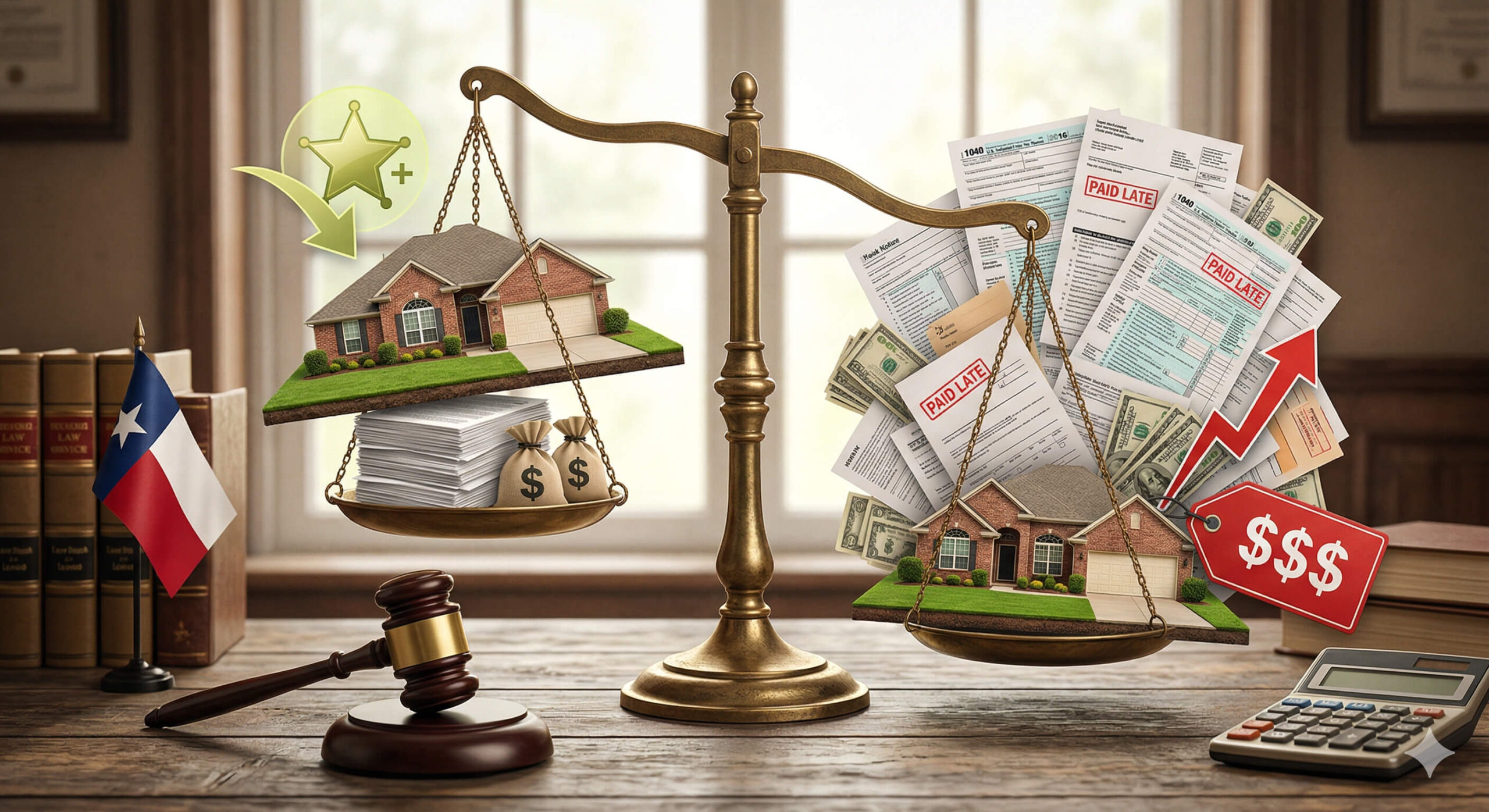
Have you ever looked at your neighbor’s property tax bill and thought: “Why am I paying more than they are?” You are not alone. This is one of the most common questions property owners ask, and the answer is not always obvious. Here is what is really going on.
In Texas, similar homes can still have very different tax bills. The difference often comes down to exemptions, capped values, ownership history, and whether one owner has successfully challenged their assessment. If you are trying to understand the bigger picture, visit our Property Tax Appeal Texas page for a full overview.
Your neighbor’s property taxes may be lower because they have exemptions, a capped taxable value, a longer ownership history, or a reduced value after a successful protest.
Many people assume property taxes are based solely on what a home is worth. But in Texas, your tax bill depends on several factors:
So even if your home is similar or identical to your neighbor’s, your tax bill can still be very different. For a deeper explanation, read our article on Market Value vs. Appraised Value in Texas.
One of the biggest reasons for lower taxes is the homestead exemption. If your neighbor lives in their home as their primary residence, they may receive:
If you have not filed for a homestead exemption, you could be paying significantly more.
In Texas, properties with a homestead exemption generally have a 10% annual cap on taxable value increases. That means:
If you recently purchased your home, your value may have reset while your neighbor’s is still benefiting from years of capped increases.
Length of ownership matters more than most people realize. A neighbor who bought 10 or more years ago likely has a lower taxable value and has benefited from years of capped increases. Meanwhile, new buyers often see higher starting values and larger tax bills right away.
Some homeowners qualify for extra exemptions beyond the standard homestead exemption, such as:
These can significantly reduce taxable value and make a neighbor’s property taxes look much lower than yours.
Here is the part most people do not realize: your neighbor may not just be lucky. They may have protested their taxes successfully.
In areas like Houston, it is very common for property owners to protest annually, lower their assessed value, and maintain a tax advantage over nearby properties. If you are not protesting, you could be the one overpaying. See our guide on Can You Protest Your Property Taxes Every Year in Texas? for more on why annual protests matter.
Texas law allows you to protest based on unequal appraisal. This means that if your property is valued higher than similar homes nearby, you may be entitled to a reduction.
Appraisal districts use mass appraisal models, which do not always reflect individual differences accurately. If you want to understand this issue better, read What Is an Unequal Appraisal in Texas Property Taxes?.
If your property is valued higher than similar nearby homes, that difference may support a protest even if the county argues the market is rising overall.
Even small differences can impact value, including:
If your property is in worse condition but valued the same as or higher than nearby homes, that can be a strong basis for a protest.
Even if you have a good case, timing matters. Missing the filing deadline can cost you the chance to challenge your value for that year. Review our Property Tax Appeal Deadlines in Texas by County page so you know when to act.
If your neighbor is paying less in property taxes, it is usually because:
And if none of those apply to you, there is a good chance your property may be over-appraised. PropertyTaxes.Law reviews properties every year and knows where appraisal districts make mistakes. Learn more about our Property Tax Appeal Services or start with our Property Tax Protest page.
If your neighbor’s tax bill is lower and your value seems too high, PropertyTaxes.Law can review your case and help you challenge an unfair assessment.
Get a Free ReviewBrandon and his team have proven they can perform with any product type we give them,
from industrial and office property to single and multi-family residential.
At a critical time when a property was in lease-up, we were faced with an unreasonable and unjustified assessment.
Brandon’s tenacity and responsiveness resulted in a fair assessment and the largest value change I've seen in my career.
Outstanding!! These guys are pros - they are great at what they do and great to work with.