What Is Unimproved Land? Definition, Examples & Texas Tax Guide
What "unimproved land" means on your tax notice, Zillow listing, or real estate contract — and how Texas appraisal districts assess and tax it.
Reviewed by Brandon Barcus, Texas Property Tax Attorney Updated June 2026 7-minute read
Definition
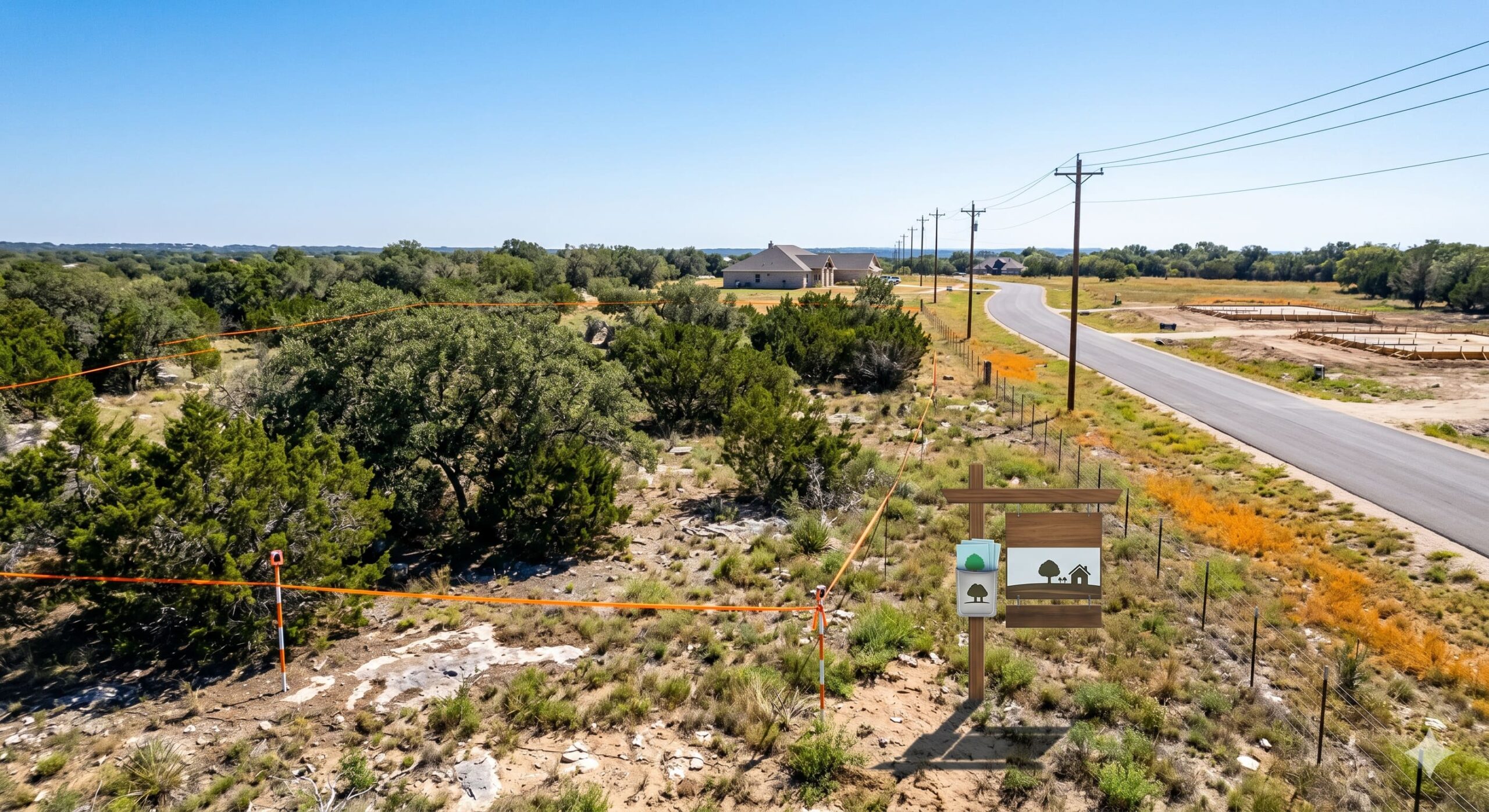
Unimproved land is real property that has not been developed, built upon, or substantially modified from its natural state — a parcel of bare land with no structures, utilities, or infrastructure.
Also called raw land, vacant land, or bare land. In Texas property tax records, "unimproved" is an official designation that affects how an appraisal district values and taxes the parcel.
The term "unimproved land" appears in several contexts — on your property tax notice, in a Zillow or MLS listing, in a Texas real estate contract, or in an appraisal district's records. The meaning is consistent across these uses, but the implications — especially for property taxes — vary significantly.
This guide explains the definition in plain terms, shows real examples, compares unimproved to improved land, and covers the Texas-specific property tax rules that apply to unimproved parcels.
Examples of Unimproved vs. Improved Land
The deciding question is whether the land has been developed or has had structures, utilities, or improvements added to it:
Unimproved land — qualifies as:
Unimproved
Vacant wooded lot with no clearing or utilities
Unimproved
Undeveloped agricultural land with no buildings
Unimproved
Platted subdivision lot before construction begins
Unimproved
Waterfront acreage with no dock or structures
Improved land — does NOT qualify:
Improved
Residential lot with a house or any structure
Improved
Commercial land with a building or paving
Improved
Land with water, sewer, or electrical connected
Improved
Land with a paved road, driveway, or graded pad
Gray area: A parcel where a structure has been demolished may be reclassified as unimproved if no improvements (foundations, utilities) remain. Texas appraisal districts look at the physical state of the land on January 1 of each tax year — not what was there previously.
Improved vs. Unimproved Land: Key Differences
The distinction affects financing, insurance, zoning, and most importantly property taxes:
Factor
Unimproved Land
Improved Land
Structures present
✗ None
✓ Building, home, or structure
Utilities connected
✗ Typically none
✓ Water, sewer, electric, gas
Property tax basis
Land value only
Land value + improvement value
Assessed value
Lower (land only)
Higher (land + structures)
Mortgage financing
Land loan (higher rates)
Standard mortgage available
Homestead exemption (TX)
✗ Not eligible
✓ Eligible (primary residence)
Texas real estate contract
TREC Form 9 (Unimproved)
TREC Residential or Commercial
Raw Land vs. Unimproved Land: Is There a Difference?
These terms are often used interchangeably, but there is a technical distinction:
Raw land
Raw land is in its completely natural, untouched state — no grading, no clearing, no infrastructure. It typically has no road access, no utility lines nearby, and may not yet be platted or zoned. Raw land is the most basic form of unimproved land.
Unimproved land
Unimproved land is a broader category that includes raw land but also encompasses parcels that may have been platted, cleared, or graded — without structures or connected utilities. A subdivision lot that has been graded with a paved street in front of it, but has never been built on, is technically unimproved land.
In Texas property tax records: If a parcel has no improvement value on the appraisal district's record, it is treated as unimproved regardless of whether it has been platted or has road access. The classification determines which comparable sales method the district uses to arrive at the taxable value.
What Does "Unimproved Land" Mean on Zillow?
If you see a listing described as "unimproved land" on Zillow or Realtor.com, it means the property is a bare parcel with no buildings or structures. Key things buyers need to know:
Standard mortgage financing is not available. You will need a land loan or construction loan — typically requiring a larger down payment (20–50%) and a higher interest rate.
You are buying land, not a home. There are no appliances, HVAC, or plumbing. A different due-diligence checklist applies: zoning, utilities access, soil quality, flood zone, wetlands, and mineral rights.
Property taxes are assessed differently. The tax is based solely on land market value. In fast-growing Texas markets, unimproved land can be aggressively appraised by the appraisal district — even before any development occurs.
Texas note: Many Zillow listings in Austin, Houston, Dallas-Fort Worth, and San Antonio show unimproved lots that have been aggressively assessed. If the assessed value seems high relative to comparable vacant land nearby, the assessment can be challenged. See how to protest your Texas property tax assessment.
How Are Unimproved Land Property Taxes Assessed in Texas?
This section is specific to Texas. If you own unimproved land in Texas, this directly affects what you owe — and whether you can challenge it.
In Texas, property taxes are assessed by county appraisal districts (CADs) — HCAD (Harris County), TCAD (Travis County), DCAD (Denton County), BCAD (Bexar County), and others. Every property, including unimproved land, is appraised at market value as of January 1 each year. For unimproved parcels, the district assigns value to land only, with no improvement component.
How appraisal districts value unimproved land
Comparable sales method
The district compares your parcel to recent sales of similar unimproved lots — similar size, zoning, location, and utility access. In active development corridors, recent land sales can push values up rapidly even if your specific parcel is not yet development-ready.
Land abstraction method
Where land sales are limited, the district may estimate land value by subtracting improvement value from improved-property sale prices. What remains is the implied land value. This can produce inflated results if improvements are under-deducted.
Land schedule / zone-based pricing
Many CADs apply a price-per-square-foot or price-per-acre rate for all parcels within a defined zone. If the zone rate is set too high, every unimproved parcel in that zone is systematically over-valued — which is grounds for an unequal-appraisal protest.
Special exemptions and classifications for Texas land
Agricultural use (1-d-1): Land used principally for agriculture for 5 of the past 7 years may qualify for appraisal at its agricultural productivity value — often far below market value.
Timber land: Land used for timber production may qualify for special valuation based on productive capacity.
Wildlife management: Land transitioning from agricultural use to wildlife management may maintain agricultural appraisal treatment.
Rollback taxes: If land loses an agricultural exemption — because it is sold or converted — Texas law requires payment of a rollback tax equal to the difference between taxes paid at the agricultural rate and market-value rates for up to three preceding years, plus interest. Understanding this before purchasing agricultural unimproved land in Texas is critical.
Can You Protest a Property Tax Assessment on Unimproved Land in Texas?
Yes — and it is often worth doing. Unimproved parcels are frequently over-assessed because:
The district uses broad land-schedule rates that do not account for specific limitations on your parcel — access issues, irregular shape, drainage problems, deed restrictions, or environmental constraints.
The comparable sales used may be genuinely different properties — corner lots, parcels with road frontage, or lots with utility connections that your land lacks.
In fast-growing Texas markets, the district may apply zone-wide increases that assume development potential your specific parcel does not have.
Grounds for protesting an unimproved land assessment
Over-appraisal: The assessed value exceeds what the parcel would actually sell for.
Unequal appraisal: Your parcel is assessed higher per acre than comparable unimproved parcels in the district's own records.
Incorrect property data: Wrong acreage, wrong zoning classification, or incorrect land characteristics in the district's records.
The protest process follows the same path as any Texas property tax protest — informal review, optional settlement, and ARB hearing if unresolved. The deadline is May 15 or 30 days after your Notice of Appraised Value is delivered, whichever is later. For a full guide, see our Texas property tax protest page.
Attorney advantage: Unimproved land protests involving large acreage, agricultural reclassification, or commercial development potential often benefit from legal representation — especially when rollback taxes, special valuations, or large dollar amounts are involved. Contact PropertyTaxes.Law to discuss your parcel.
Can You Build on Unimproved Land?
Yes, in most cases — but several requirements must be satisfied before construction can begin:
Zoning and permitted uses
The parcel must be zoned for the type of structure you want to build. Contact the city or county planning department to confirm what is permitted.
Utilities
Unimproved land has no connected utilities. You will need to arrange connection to water, sewer or septic, electricity, and gas. In rural Texas, well and septic installation can add $15,000–$50,000+ to development costs.
Road and access
If the parcel has no paved road access, you may need to arrange an easement or road construction before permits will be issued.
Flood zone and environmental restrictions
Check FEMA flood maps and confirm there are no wetlands, protected habitat, or environmental easements on the parcel that limit buildable area.
TREC Unimproved Property Contract (Texas)
In Texas, the purchase of unimproved land through a licensed agent uses TREC Form 9 — the Unimproved Property Contract. It includes specific due-diligence contingencies for zoning, environmental conditions, and a feasibility period during which the buyer can terminate without losing earnest money.
Once construction begins, the parcel transitions from unimproved to improved in the appraisal district's records — triggering a reassessment that adds the improvement value to your tax bill.
Frequently Asked Questions
Unimproved land is real property that has not been developed — no buildings, structures, or connected utilities. Also called raw land or vacant land, it is valued solely on the underlying land. In Texas property tax records, "unimproved" is a specific classification that determines how the appraisal district calculates taxable value.
On Zillow, "unimproved land" means a bare parcel with no house, building, or structure. Buying it requires a land loan — not a standard mortgage — plus due diligence on zoning, utilities, access, and flood zone. In Texas, these parcels can be aggressively valued by county appraisal districts even before development.
Improved land has structures, utilities, or development on it. Unimproved land has none of these. For property taxes, improved land is assessed on both land value and improvement value; unimproved land is assessed on land value only. Financing, insurance, and real estate contracts also differ — in Texas, unimproved land uses the TREC Unimproved Property Contract (Form 9).
In real estate, unimproved land is any parcel that has not been developed with buildings, utilities, or substantial site improvements. It may be a platted subdivision lot, a raw acreage tract, an agricultural parcel, or a commercial outparcel — as long as nothing has been built on it and utilities have not been connected to it.
The appraisal district values unimproved land at its market value as of January 1 using comparable land sales or a zone-based land schedule. You multiply that assessed value by the combined tax rate of all applicable taxing entities (city, county, school district, special districts). No homestead exemption is available on unimproved land. Agricultural land may qualify for a special-use valuation based on productive capacity rather than market value, which can significantly reduce the tax burden.
Yes. Any Texas property owner may protest their assessed value. The deadline is May 15 or 30 days after your Notice of Appraised Value is delivered, whichever is later. Common grounds for unimproved land protests include over-appraisal (the market value is too high), unequal appraisal (your parcel is assessed higher per acre than comparable unimproved parcels), and incorrect property data. For large acreage or agricultural-use parcels, working with a property tax attorney typically produces better results.
The TREC Unimproved Property Contract (Texas Real Estate Commission Form 9) is the standard contract used by licensed Texas agents for the sale of unimproved land. Unlike the residential resale contract, it includes specific provisions for buyer due-diligence on zoning, feasibility, utility availability, environmental conditions, and access. It also provides a defined feasibility period during which the buyer may terminate and recover earnest money.
No. The homestead exemption requires the property to be your principal residence — meaning a home must exist on the land. Vacant unimproved land does not qualify. Once you build a primary residence on the parcel and move in, you can apply for the homestead exemption for the following tax year. Agricultural exemptions are separate — unimproved agricultural land can qualify for a special-use agricultural valuation if it meets the qualifying use requirements.
Own Unimproved Land in Texas?
If your vacant land has been over-assessed by a Texas appraisal district, PropertyTaxes.Law can review the valuation and help you build a stronger protest.
Brandon and his team have proven they can perform with any product type we give them,
from industrial and office property to single and multi-family residential.
- HunterBrown, InSite Realty Partners, L.P.
At a critical time when a property was in lease-up, we were faced with an unreasonable and unjustified assessment.
Brandon’s tenacity and responsiveness resulted in a fair assessment and the largest value change I've seen in my career.
- Jeremy Bartholomew
Outstanding!! These guys are pros - they are great at what they do and great to work with.
- David Denenburg, Denenburg Interests, LLC / Station 3