

Texas is known for having some of the highest property taxes in the country, but what catches many property owners off guard is how aggressive the state is when those taxes are paid late. If you miss the payment of property taxes deadline, the financial consequences snowball rapidly.
If you are looking for a tax penalty calculator to figure out exactly how much you owe in late fees, this guide will break down the exact formula the state uses.
For most property owners, tax bills are mailed out in October and are due by January 31st of the following year. If the bill is not paid in full by January 31st, the taxes officially become delinquent on February 1st.
Texas imposes both a flat penalty and a recurring interest charge for late payments. The penalty starts at 6% in February and increases by 1% each month. The interest starts at 1% in February and also increases by 1% each month.
Here is how you can calculate your exact late fees (based on your base tax bill) if you pay late:
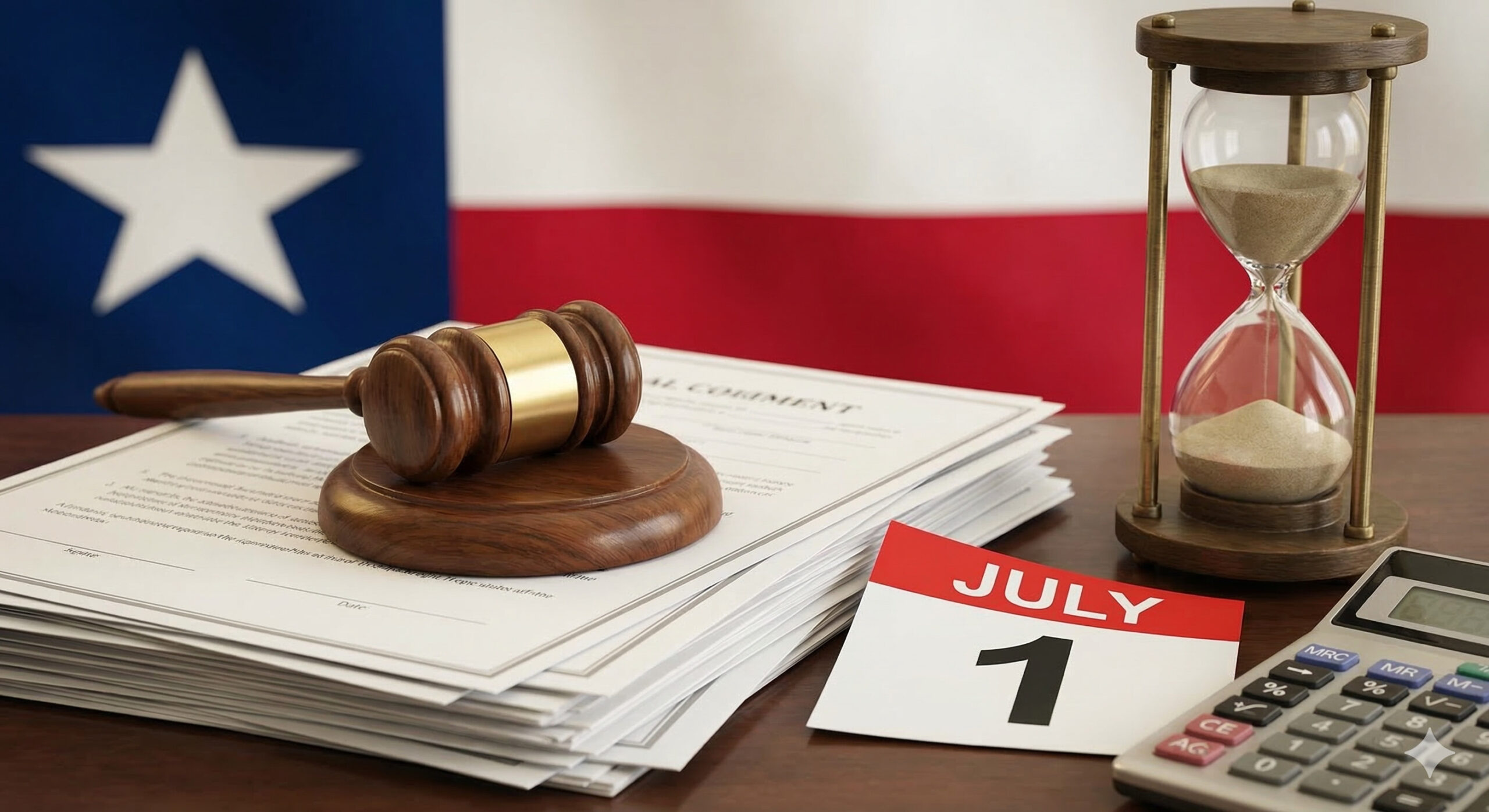
While the standard monthly penalties are painful, July 1st is the day property owners must avoid at all costs. On July 1st, delinquent tax accounts are turned over to third-party collection attorneys. When this happens, an additional collection penalty of 15% to 20% is tacked onto your total bill (which already includes the 18% in standard penalties and interest).
Texas law is incredibly strict regarding penalty waivers. Under Texas Tax Code Section 33.011, a waiver may only be granted in highly specific situations. Crucially, excuses like "I forgot," "I never received the bill," or "I didn't have the funds" are not legally valid reasons to waive a penalty. Acceptable reasons include:
Because property tax rates by city in Texas are so high, these penalties can quickly amount to thousands of dollars. If you are struggling to pay your property taxes, the absolute best form of property tax relief in Texas is to ensure your property is not over-valued in the first place.
By protesting your property value every single year, you can lower the base assessment, which permanently lowers the tax bill you have to pay.
It's time to reduce your assessment. Schedule a free consultation with the property tax attorneys at PropertyTaxes.Law.
Review My Property TaxesBrandon and his team have proven they can perform with any product type we give them,
from industrial and office property to single and multi-family residential.
At a critical time when a property was in lease-up, we were faced with an unreasonable and unjustified assessment.
Brandon’s tenacity and responsiveness resulted in a fair assessment and the largest value change I've seen in my career.
Outstanding!! These guys are pros - they are great at what they do and great to work with.